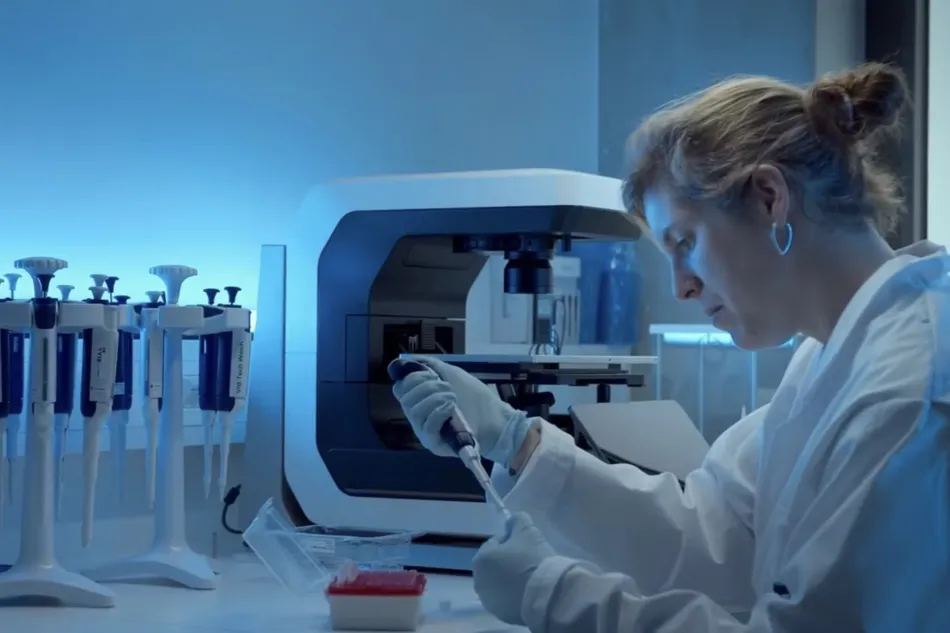
“We expect the boundaries between core facilities to blur even further”
Tech Watch on what’s on the horizon for 2026

From experimental design aided by automation and AI to deployable protein sequencing and richer single-cell measurements, Tech Watch outlines the technologies most likely to shape research workflows in 2026.
If you ask our Tech Watch team, this year is shaping up to be a year where several long-anticipated technologies begin to truly come of age. Andries De Koker, Bram Van den Bergh, Samantha Zaunz, Sarah Geurs, Toon Swings, and Wai Long Tam scout and de-risk the newest technologies in service of our research community. They have big expectations for 2026 when it comes to automation, protein sequencing, and multiparameter single-cell readouts.
Automation moves beyond the wet lab
“Automation is not new to life sciences. What is new is the breadth of its reach and the maturity of its applications,” says Bram Van den Bergh. “While wet-lab automation already saw a major boost in the years since the corona pandemic, we expect 2026 to bring accelerated uptake of automation not only within wet labs, but well beyond them: into experimental design, data interpretation, and decision-making workflows.”
Across VIB Technologies’ cores, we already see how automation is transforming daily operations: from smarter scheduling and instrument uptime to more reproducible pipelines and scalable services. But the most significant shift lies outside traditional lab and analytical boundaries. A new generation of start-ups and platforms is emerging that focuses on designing biology rather than merely observing and analyzing it.
“We’re talking about AI-driven approaches to biomolecule design, novel routes to regulate biological systems, and the identification of pristine drug targets or compounds with biotechnological relevance.”
Many AI applications that hovered in proof-of-concept or pilot phases are rapidly moving toward commercial viability. “In 2026, we expect these tools to become part of everyday research practice, raising new questions about validation, interoperability, and how best to embed them responsibly into scientific workflows.”
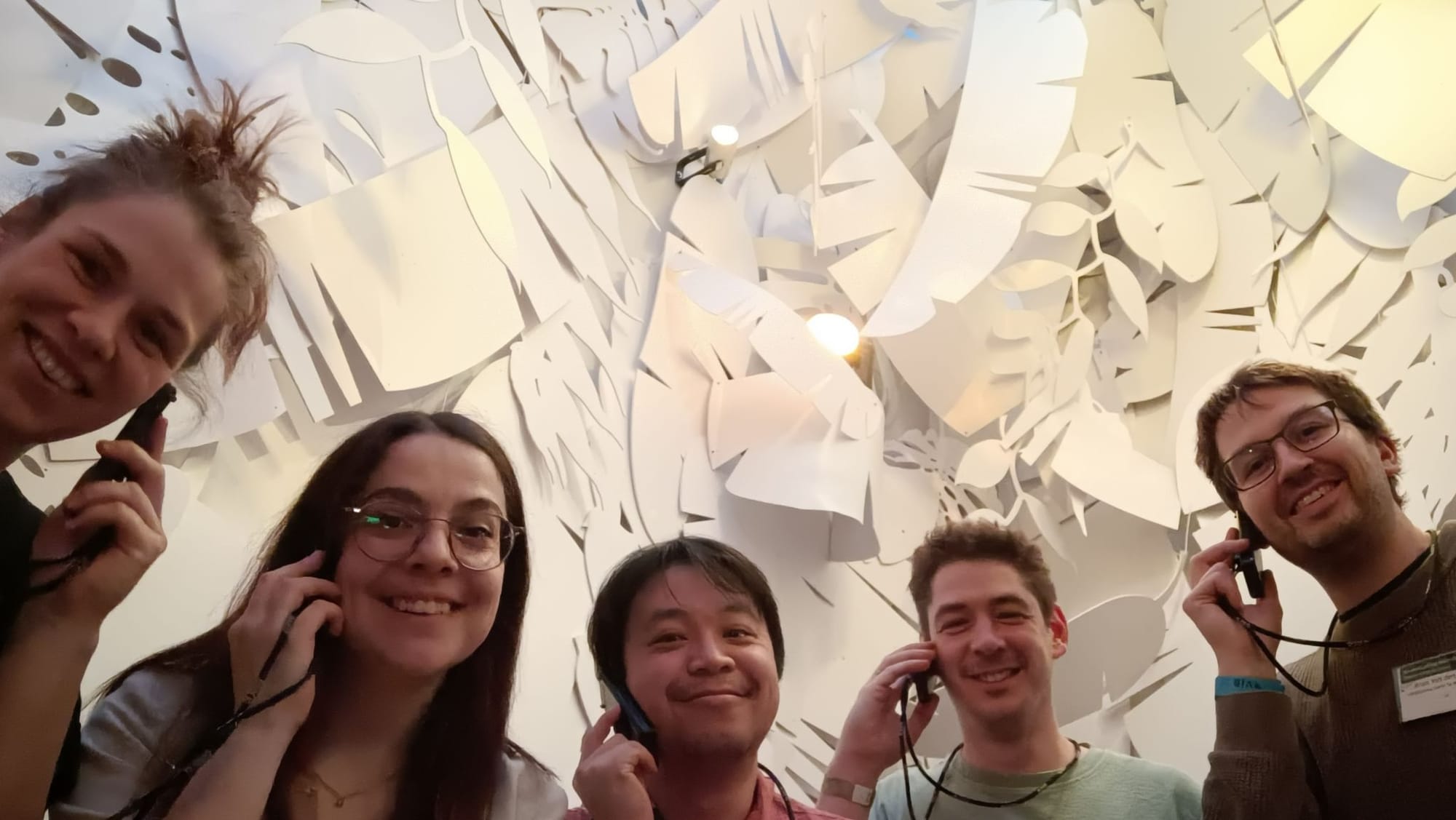
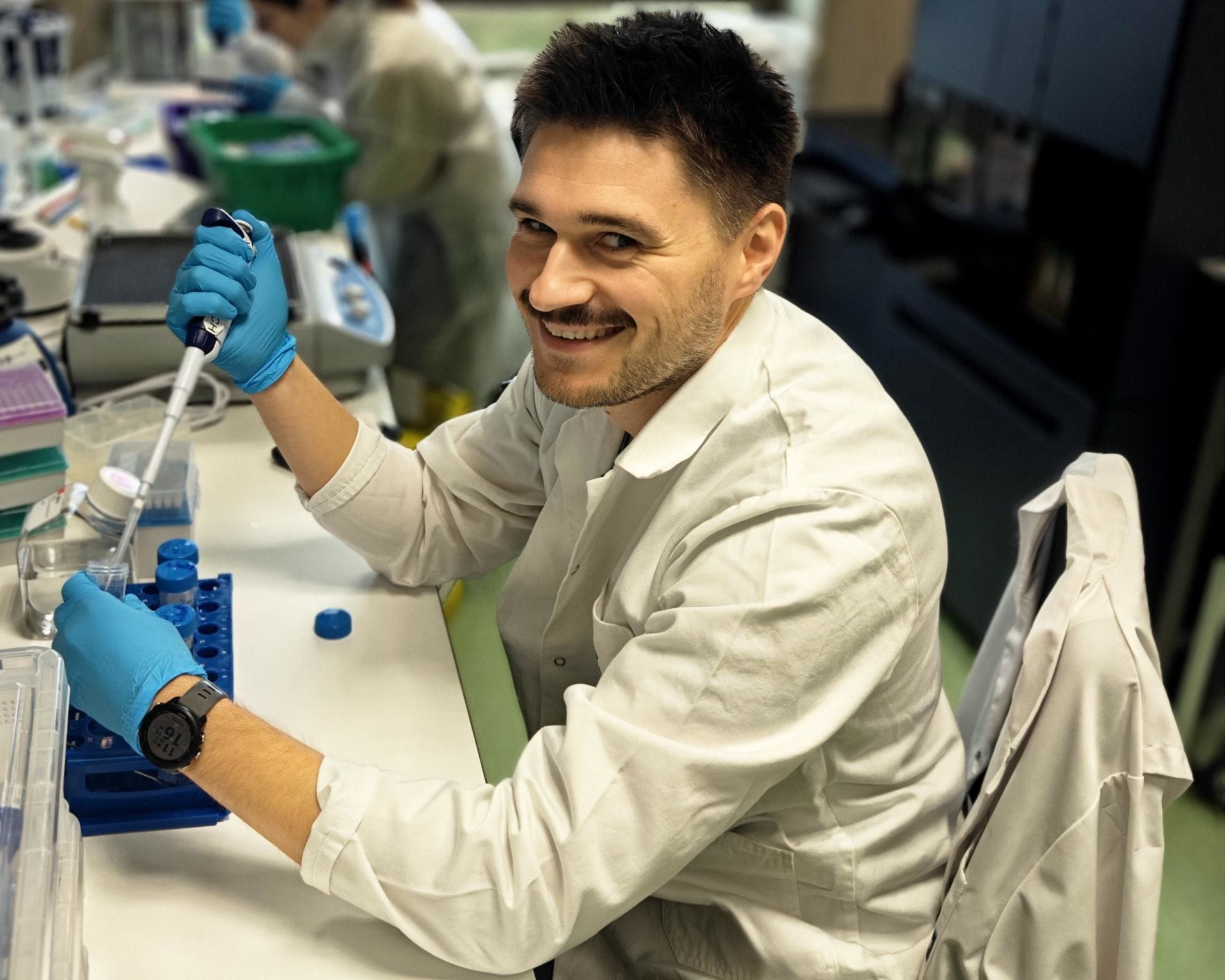
The VIB Tech Watch Core team in mid 2025 (left) and latest addition Andries De Koker (right)
Protein sequencing steps out of the shadows
Another area the Tech Watch team continues to watch closely is protein sequencing. “2025 saw an explosion of new approaches and ideas of how to tackle this years-old problem,” says Sarah Geurs. “We saw novel chemistries, innovative sensing technologies, and ambitious platform concepts, yet most of these developments remained in stealth mode or early alpha testing.”
That is likely to change in 2026, she believes. “We anticipate that at least some of these emerging protein sequencing technologies will transition from guarded prototypes to deployable instruments and services.”
The ability to directly sequence proteins and their modifications at scale would represent a major leap forward, complementing established proteomics approaches and opening entirely new research avenues.
“Bringing such technologies in-house will allow us to critically assess performance, reproducibility, and integration with existing workflows, so that when the technology is ready, the research community is ready too.”
Beyond omics: richer single-cell readouts
Single-cell technologies have transformed biology, but the next wave is all about depth, not scale. “A clear trend for 2026 is the increasing multiparametrization of single-cell readouts beyond classical omics,” says Toon Swings.
“Rather than focusing on a single layer, new platforms aim to combine spatial, functional, phenotypic, and dynamic information at the single-cell level.”
Platforms such as Lightcast, currently under evaluation within the Tech Watch Core, already push toward more integrated, information-rich measurements.
“What excites us is the emergence of new technologies that extend this philosophy further, capturing cellular behavior in ways that are closer to biological reality,” says Andries De Koker.
For the Flow, BioImaging, Screening, Nucleomics, and Data Cores, as well as the Spatial Catalyst, this convergence is especially relevant, Samantha Zaunz believes:
“It reinforces the need for close collaboration across expertise domains, from instrumentation and assay development to image analysis and data integration.”
Blurring boundaries
“In 2026, we expect these boundaries to blur even further, making interdisciplinary pipelines not just advantageous, but essential,” says Wai Long Tam.
For the Tech Watch team, this reinforces its role as connectors from the start of identifying a novel technology to its final implementation in service. The insights shared by all other Cores, whether about automation, advanced imaging, data infrastructure, or community-driven innovation, feed directly into this perspective.
Rather than tracking isolated breakthroughs, Tech Watch focuses on how technologies intersect, mature, and become actionable within real research environments. The mission of the VIB Tech Watch Core, in that sense, is about keeping a close eye on the horizon while actively preparing the ground for what’s coming.